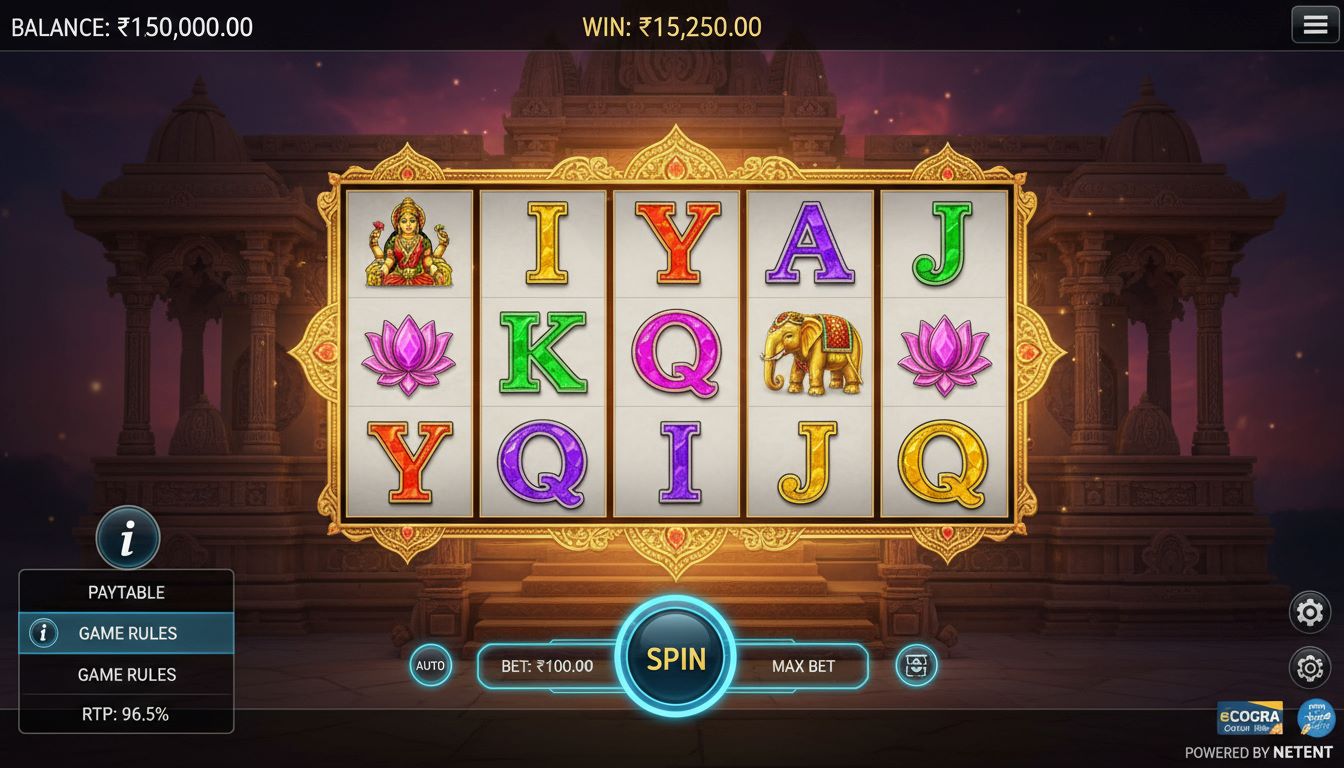
How to identify fair-play slot games
The online slot gaming landscape in India presents unique challenges where fair-play verification becomes crucial for player safety. With the proliferation of offshore casino operators targeting Indian players, distinguishing between legitimate slot games and potentially fraudulent offerings has never more important. Scam operations often exploit regulatory gray areas, leaving players vulnerable to rigged games, withheld winnings, and data breaches.
This comprehensive guide empowers Indian slot enthusiasts to make informed decisions by providing clear identification markers for fair-play games. Understanding licensing requirements, RNG certification, payout transparency, and red flag indicators enables players to navigate the complex online gambling environment safely and confidently.
1. Licensing and Regulatory Compliance in India
The regulatory framework governing online slots in India operates within a complex web of state and central laws, creating significant challenges for players seeking legitimate gaming options. While the Public Gambling Act of 1867 remains the primary central legislation, individual states maintain authority over gambling regulations, leading to a fragmented legal landscape that offshore operators often exploit.
Understanding recognized licensing authorities becomes essential for identifying compliant slot games. International jurisdictions like Curaçao, Malta, and the Isle of Man provide the primary regulatory oversight for operators serving Indian players, while domestic options remain extremely limited.
The absence of comprehensive federal online gambling legislation creates enforcement gaps that both legitimate operators and fraudulent schemes navigate differently. State-level variations, such as Sikkim’s attempts at online gambling regulation, demonstrate the complexity players face when evaluating game legitimacy.
Verification of licensing credentials requires active player participation, as operators may display false or expired licensing information to appear legitimate while operating without proper oversight.
| License Type | Recognized Authorities | Indian Relevance | Key Compliance Features |
|---|---|---|---|
| Curaçao eGaming | Government of Curaçao | Most common for Indian-facing sites | RNG audits, financial reporting, dispute resolution |
| Malta Gaming Authority | MGA Malta | Premium tier, higher compliance standards | Strict KYC, game certification, player funds protection |
| Gibraltar Gambling License | Gibraltar Regulatory Authority | Limited operators serving India | Comprehensive auditing, software testing, responsible gaming |
| UK Gambling Commission | UKGC | Rarely accepts Indian players | Highest standards, regular compliance reviews |
| Sikkim Online Gaming | Government of Sikkim | Domestic option, limited scope | Local compliance, restricted game types |
What a Valid Online Casino License Looks Like
A legitimate casino license displays specific verification elements that players should actively check before engaging with any slot platform. Valid licenses include unique registration numbers, issuing authority details, expiration dates, and direct links to regulatory databases where players can independently verify the license status.
The verification process involves visiting the licensing authority’s official website and searching their public registry using the operator’s license number or company name. Legitimate operators facilitate this verification by providing clickable license seals that redirect to official regulatory confirmations, while fraudulent sites often use fake seals or broken verification links.
Legal Loopholes and Risks for Indian Players
The current legal framework creates several risk areas that players must navigate carefully. While the central government has not explicitly banned online gambling, payment processing restrictions and state-level prohibitions create operational challenges that affect game fairness and player protection.
Enforcement inconsistencies mean that players may access seemingly legitimate sites that suddenly become unavailable due to regulatory action, potentially trapping funds or gaming history. The lack of standardized consumer protection mechanisms across jurisdictions leaves Indian players with limited recourse when disputes arise with offshore operators.
Banking restrictions force many operators to use alternative payment methods that may lack traditional fraud protections, increasing the risk of financial exposure for players. Understanding these limitations helps players make more informed decisions about fund management and dispute resolution expectations when engaging with offshore slot platforms.
2. Random Number Generator (RNG) and Game Auditing
Random Number Generator certification forms the cornerstone of fair-play slot games, ensuring that game outcomes remain truly random and unmanipulated. For Indian players, verifying RNG certification provides crucial protection against rigged games that artificially reduce winning probabilities or manipulate timing to disadvantage players during profitable sessions.
Independent auditing agencies like eCOGRA and iTech Labs serve as trusted intermediaries, conducting rigorous testing of slot algorithms and issuing certifications that operators can display to demonstrate fairness. These certifications require ongoing compliance monitoring, meaning that certified games undergo regular re-testing to maintain their validity.
The complexity of RNG technology means that players cannot directly test randomness, making third-party certification essential for fair-play verification. Understanding how to identify and verify these certifications empowers players to distinguish between legitimate certified games and potentially manipulated alternatives.
Audit trails and certification transparency provide additional layers of verification, with reputable operators publishing detailed testing reports and certification dates that players can cross-reference with auditing agency records.
- Look for clearly displayed RNG certification seals from recognized testing agencies like eCOGRA, iTech Labs, or Gaming Laboratories International
- Verify certification currency by checking issue dates and expiration periods, as outdated certifications may indicate lapsed compliance
- Cross-reference operator claims with auditing agency databases to confirm legitimate certification status
- Identify detailed RNG testing reports that specify testing methodologies, statistical analysis, and compliance standards
- Confirm that certifications cover the specific slot games you intend to play, not just general platform certification
- Watch for fake or generic certification seals that lack clickable verification links or official agency branding
Recognized Auditing Agencies for Slot Certification
The slot auditing industry relies on several established agencies that have built reputations for rigorous testing and reliable certification processes. These organizations operate independently from game developers and casino operators, providing objective assessments of game fairness and RNG implementation.
Understanding the hierarchy and specializations of different auditing agencies helps players evaluate the quality and trustworthiness of certifications. While multiple agencies provide legitimate services, some have established stronger reputations and more comprehensive testing protocols that offer enhanced player protection.
The global nature of online gambling means that different agencies may focus on specific markets or regulatory requirements, making it important for Indian players to recognize which certifications provide the most relevant and comprehensive protection for their gaming activities.
- eCOGRA (eCommerce Online Gaming Regulation and Assurance) – Most widely recognized, comprehensive testing protocols, regular compliance monitoring
- Gaming Laboratories International (GLI) – Industry veteran, extensive global presence, detailed statistical analysis
- iTech Labs – Australian-based, strong reputation for RNG testing, covers wide range of game types
- BMM Testlabs – Focus on compliance and certification, recognized by major regulatory bodies
- Technical Systems Testing (TST) – Specialized in gaming technology verification, comprehensive audit reports
3. RTP (Return to Player) and Payout Transparency
Return to Player percentage represents one of the most critical metrics for evaluating slot game fairness, indicating the theoretical percentage of wagered money that a slot machine returns to players over extended play periods. For Indian players, RTP transparency provides essential information for making informed gaming decisions and identifying potentially unfair games that offer below-market payout rates.
Legitimate slot operators publish RTP information prominently and provide easy access to detailed payout data, while questionable operators often hide or misrepresent this information. The industry standard for reputable slots typically ranges between 94% and 98%, with variations based on game complexity and target market preferences.
Transparency requirements vary significantly between jurisdictions, with some regulatory bodies mandating detailed RTP disclosure while others provide minimal oversight. This inconsistency creates challenges for Indian players who must actively seek out and verify payout information from multiple sources.
Understanding RTP calculation methodologies helps players evaluate whether published figures reflect actual game performance or represent theoretical calculations that may not align with real-world playing conditions. Independent verification through player communities and review platforms provides additional validation of operator RTP claims.
The relationship between RTP, volatility, and actual playing experience requires careful consideration, as high RTP games may still provide poor short-term results due to variance factors that affect individual gaming sessions.
| Slot Game | Published RTP % | Source of RTP Data | Volatility | Transparency Level |
|---|---|---|---|---|
| Starburst | 96.09% | NetEnt Official | Low | Excellent |
| Book of Dead | 94.25% | Play’n GO | High | Good |
| Mega Moolah | 88.12% | Microgaming | Medium | Fair |
| Gonzo’s Quest | 95.97% | NetEnt Verified | Medium | Excellent |
| Sweet Bonanza | 96.51% | Pragmatic Play | High | Good |
| Unknown Provider Game | 98.50% | Casino Website Only | Unknown | Poor |
How to Find & Interpret RTP Information
Locating accurate RTP information requires a systematic approach that combines multiple verification sources to ensure data reliability. Reputable casinos typically display RTP percentages in game information sections, help menus, or dedicated transparency pages, while game developers often publish official RTP figures on their corporate websites or technical specification documents.
Interpreting RTP data involves understanding the mathematical context and limitations of these percentages. RTP calculations assume millions of spins over extended periods, meaning that short-term results can vary dramatically from published figures without indicating game manipulation or unfairness.
Players should be cautious of RTP claims that seem unusually high or lack verifiable sources, as fraudulent operators may inflate these figures to attract players while operating games with significantly lower actual payout rates. Cross-referencing multiple sources and checking for independent audit confirmation helps validate RTP accuracy.
Common Myths about RTP and Slot Fairness
The slot gaming community perpetuates numerous misconceptions about RTP and game fairness that can lead players to make poor decisions or misinterpret their gaming experiences. These myths often stem from misunderstanding probability mathematics or accepting anecdotal evidence over statistical reality.
Correcting these misconceptions helps players develop more realistic expectations and better evaluation criteria for assessing game fairness. Understanding the difference between theoretical RTP and practical playing experience prevents players from drawing incorrect conclusions about game manipulation based on short-term results.
Educational awareness of common RTP myths also helps players identify potentially fraudulent claims or marketing tactics that exploit these misunderstandings to promote questionable gaming products or services.
- Myth: “Hot” and “cold” slot machines exist – Reality: Each spin is independent and previous results do not influence future outcomes
- Myth: Higher RTP guarantees better winnings – Reality: RTP is calculated over millions of spins and doesn’t predict individual session results
- Myth: Casinos can remotely adjust RTP during play – Reality: Legitimate slots use certified RNG systems that cannot be modified in real-time
- Myth: Playing at certain times increases winning chances – Reality: RNG systems operate continuously and time of play has no impact on outcomes
- Myth: Progressive jackpots reduce base game RTP – Reality: Published RTP figures typically include all possible payouts including progressive contributions
4. Trusted Software Providers and Game Origins
The software provider behind slot games serves as a primary indicator of fairness and quality, with established developers maintaining reputations built over years of regulatory compliance and industry oversight. For Indian players, recognizing trusted providers helps identify legitimate games while avoiding potentially rigged or low-quality alternatives that may compromise both entertainment value and financial security.
Established providers invest heavily in certification processes, regulatory compliance, and reputation management, making them natural partners for legitimate casino operators. These companies typically maintain transparent development processes, publish detailed game specifications, and submit to regular third-party auditing to preserve their market credibility.
The proliferation of fake or questionable game developers targeting emerging markets like India creates significant risks for uninformed players. These providers often create low-quality games with poor graphics, limited features, and questionable fairness standards while attempting to mimic the branding and appearance of established developers.
Understanding provider verification methods enables players to distinguish between legitimate developers and potentially fraudulent alternatives. This includes checking official developer websites, verifying game catalogues, and confirming licensing partnerships with reputable casino operators.
| Provider | Fairness Certification | Popular Games in India | Known For | Warning Signs |
|---|---|---|---|---|
| NetEnt | eCOGRA, GLI, MGA | Starburst, Gonzo’s Quest | High-quality graphics, innovation | None – Established leader |
| Microgaming | eCOGRA, TST | Mega Moolah, Thunderstruck | Progressive jackpots, longevity | None – Industry pioneer |
| Pragmatic Play | BMM, GLI, QUINEL | Sweet Bonanza, The Dog House | Mobile optimization, variety | None – Rapidly growing reputation |
| Play’n GO | eCOGRA, iTech Labs | Book of Dead, Reactoonz | Creative themes, volatility | None – Solid reputation |
| Evolution Gaming | MGA, UKGC, GLI | Lightning series slots | Live casino innovation | None – Premium provider |
| Unknown Studios | None or fake certificates | Generic fruit machines | Poor graphics, basic gameplay | No official website, unverifiable |
| Fake NetEnt Games | Forged or absent | Modified popular titles | Copying established games | Quality inconsistencies, no verification |
Spotting Fake or Dubious Slot Providers
Identifying fraudulent or questionable slot providers requires systematic verification of developer credentials and game authenticity. Legitimate providers maintain comprehensive online presences with detailed company information, game catalogues, certification documentation, and clear contact methods for both players and business partners.
Fake providers often attempt to capitalize on the success of established developers by creating similar-sounding company names or copying popular game titles with slight modifications. These operations typically lack proper licensing, third-party certification, or verifiable business registration in recognized gaming jurisdictions.
The technical quality of games provides additional indicators of provider legitimacy, with established developers maintaining consistent standards for graphics, sound, user interface design, and feature implementation across their portfolios. Substandard technical execution often indicates questionable provider credentials and potentially compromised fairness standards.
- Verify provider websites contain comprehensive company information, licensing details, and official game catalogues with matching titles
- Search for independent reviews and reputation information from gambling industry publications and player communities
- Check that games display consistent quality standards in graphics, sound design, and user interface implementation
- Confirm provider names match exactly with established developers and avoid similar-sounding alternatives that may be imitating legitimate brands
- Look for third-party certifications from recognized auditing agencies and verify these certifications through official agency databases
- Be suspicious of providers offering unusually high RTPs, exclusive games not found elsewhere, or games that seem too good to be true
5. Player Protections: KYC, Responsible Gaming, Data Security
Comprehensive player protection systems serve as fundamental indicators of legitimate slot gaming platforms, with Know Your Customer (KYC) procedures, responsible gaming tools, and robust data security measures forming the foundation of trustworthy operations. These protections not only ensure regulatory compliance but also create environments where fair-play standards can be maintained and enforced effectively.
The implementation of proper KYC procedures helps legitimate operators maintain game integrity by preventing underage gambling, multiple account fraud, and money laundering activities that could compromise the fairness of gaming environments. For Indian players, understanding these protection mechanisms provides insight into operator legitimacy and commitment to player welfare.
Responsible gaming tools demonstrate operator commitment to player protection beyond regulatory requirements, offering practical mechanisms for players to maintain control over their gaming activities. These features typically include deposit limits, session time controls, loss limits, and self-exclusion options that help prevent problematic gambling behaviors.
Data security standards become increasingly critical as online gaming platforms handle sensitive financial and personal information from Indian players. Operators implementing comprehensive security measures demonstrate professional operational standards that correlate with fair gaming practices and reliable service delivery.
- Mandatory identity verification processes that require government-issued identification documents and address confirmation
- Comprehensive responsible gaming toolsets including deposit limits, session timers, loss limits, and self-exclusion options
- Advanced encryption protocols (SSL/TLS) for protecting data transmission and secure payment processing systems
- Regular security audits and penetration testing to identify and address potential vulnerabilities
- Clear privacy policies detailing data collection, usage, storage, and sharing practices with third parties
- Anti-money laundering (AML) procedures including transaction monitoring and suspicious activity reporting
- Player dispute resolution mechanisms with clear escalation procedures and independent arbitration options
How KYC and AML Procedures Secure Slot Fairness
Know Your Customer and Anti-Money Laundering procedures create the foundation for fair gaming environments by ensuring that all players operate under verified identities and legitimate financial circumstances. These processes help prevent sophisticated fraud schemes that could manipulate gaming outcomes or exploit system vulnerabilities for unfair advantages.
The verification requirements establish player accountability that discourages fraudulent behavior while enabling operators to maintain detailed audit trails that regulatory authorities can review. This transparency creates natural incentives for operators to maintain fair gaming practices since all activities become traceable and verifiable.
For Indian players, robust KYC implementation also provides protection against identity theft and unauthorized account usage, ensuring that gaming activities and financial transactions remain secure. The verification process, while sometimes inconvenient, ultimately protects both players and operators from various forms of fraud that could compromise gaming integrity.
Player Data Security & Privacy Standards in India
Data security implementation provides crucial insights into operator professionalism and commitment to player protection, with comprehensive security measures often correlating with higher overall operational standards including fair gaming practices. Indian players should prioritize platforms that demonstrate advanced security consciousness through multiple protection layers.
The regulatory landscape surrounding data protection in India continues evolving, with new privacy requirements creating additional compliance obligations for gaming operators. Platforms that proactively implement advanced security measures often demonstrate the same attention to detail and regulatory awareness that supports fair gaming practices.
Understanding common security indicators helps players evaluate platform trustworthiness beyond gaming-specific certifications, providing additional verification criteria for identifying legitimate operators versus potentially problematic alternatives that may compromise both data security and gaming fairness.
- Advanced encryption protocols (minimum 256-bit SSL/TLS) for all data transmission and storage with regular security certificate updates
- Multi-factor authentication options for account access including SMS, email, and authenticator app integration
- Regular third-party security audits with published compliance reports from recognized cybersecurity firms
- Data minimization practices that collect only necessary information and provide clear retention and deletion policies
- Transparent privacy policies that specify data usage, sharing practices, and player rights under applicable privacy regulations
6. Red Flags: How to Spot Scam or Unfair Slot Games
Identifying scam or unfair slot games requires vigilance for specific warning signs that indicate potentially fraudulent operations or compromised gaming integrity. These red flags often appear in combination, creating patterns that distinguish legitimate gaming platforms from questionable alternatives targeting Indian players.
The sophisticated nature of modern online fraud means that scam operations often attempt to mimic legitimate gaming platforms through copied branding, fake certifications, and professional-appearing websites. However, careful examination typically reveals inconsistencies and shortcomings that expose the fraudulent nature of these operations.
Understanding reporting mechanisms enables players to contribute to broader fraud prevention efforts while protecting other potential victims. Most legitimate regulatory authorities and consumer protection agencies maintain systems for receiving and investigating reports of fraudulent gaming operations.
The financial risks associated with scam platforms extend beyond gaming losses to include identity theft, unauthorized charges, and compromised banking information. Recognizing red flags before engaging with questionable platforms provides essential protection for Indian players navigating the complex online gaming landscape.
Early detection of warning signs enables players to avoid problematic platforms entirely, preventing both financial losses and the frustration of dealing with dispute resolution processes that may prove ineffective against fraudulent operators.
- Absence of verifiable licensing information or display of fake/expired licenses that cannot be confirmed through official regulatory databases
- Missing or questionable third-party certifications with audit seals that lack clickable verification links or redirect to non-official websites
- Vague or missing RTP information, refusal to provide payout data, or claims of unusually high RTPs that exceed industry standards
- Poor website quality with broken links, spelling errors, unprofessional design, or inconsistent branding that suggests rushed or low-budget operations
- Limited or non-existent customer support with no live chat, unresponsive email addresses, or generic responses that fail to address specific concerns
- Unrealistic bonus offers or promotions with terms and conditions that make fulfillment nearly impossible or contain hidden requirements
- Payment processing issues including limited withdrawal options, excessive processing delays, or requests for unusual payment methods that lack traditional fraud protections
Real-World Case Studies: Indian Slot Scams
The Indian online gaming market has experienced several high-profile cases of fraudulent slot operations that provide valuable learning opportunities for players seeking to avoid similar scams. These cases typically involve offshore operators that specifically target Indian players through localized marketing while operating without proper licensing or player protection measures.
One notable pattern involves operators that initially provide normal service to build player trust and positive reviews before implementing increasingly restrictive withdrawal policies or suspending payouts entirely. These operations often disappear completely once they have accumulated significant player deposits, leaving victims with little recourse for fund recovery.
Enforcement actions by Indian authorities and international regulatory bodies have revealed common characteristics of fraudulent operations, including fake licensing claims, manipulated game software, and sophisticated marketing campaigns designed to appear legitimate while concealing fraudulent intentions. Understanding these patterns helps players recognize similar operations before becoming victims themselves.